
As the first Super Bowl headliner to perform almost entirely in Spanish, Puerto Rican singer and rapper, Bad Bunny (Benito Antonio Martínez Ocasio), accomplished many ‘firsts’ throughout his Apple Music Super Bowl Halftime Show. From a live wedding, including surprise artists such as Lady Gaga and Ricky Martin, to having the first Puerto Rican Sign Language Interpreter in Super Bowl history perform, Bad Bunny broke the mold of what a Halftime Show can look like.
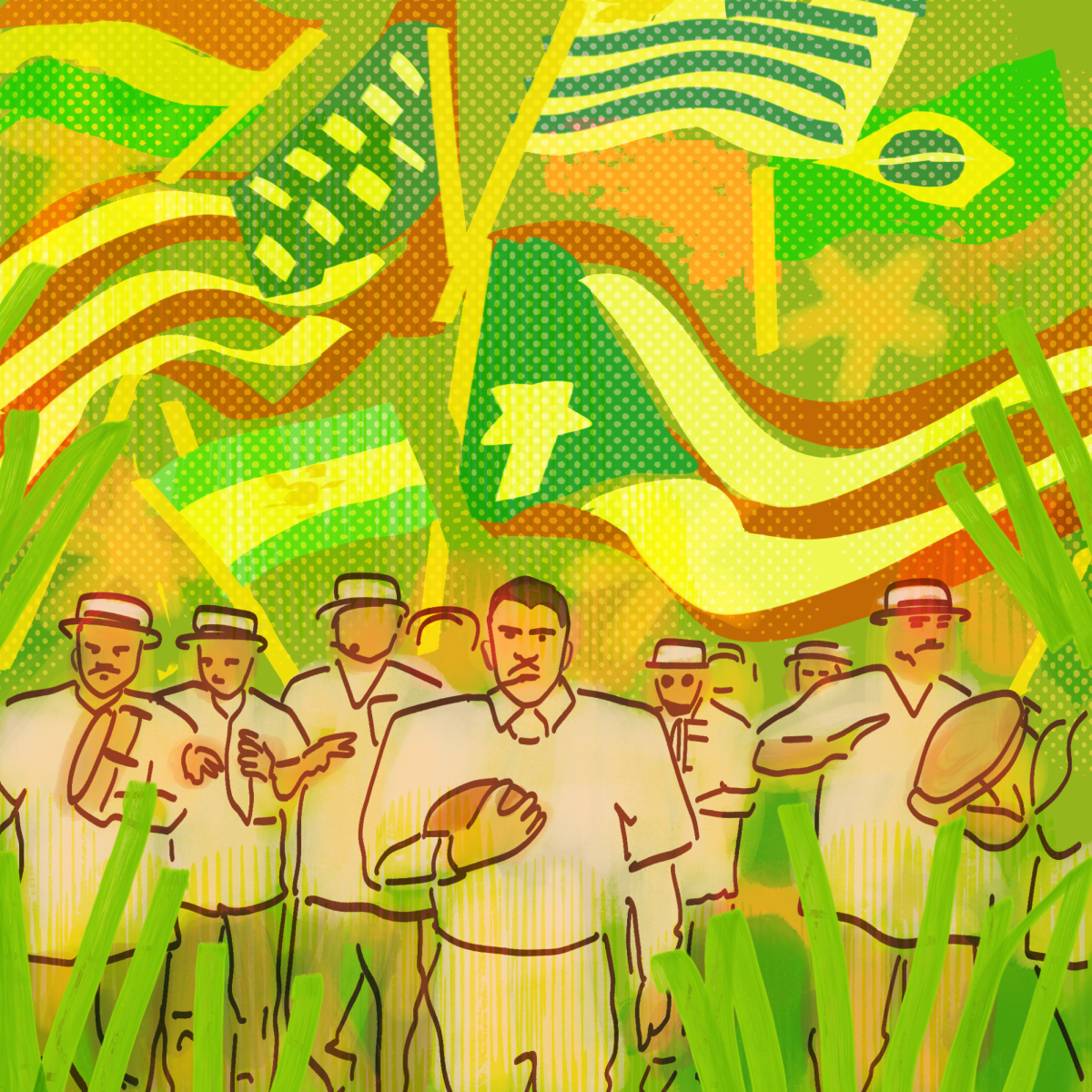
Opening in sugar cane fields (which later went viral for not being props but people dressed up as the plant to improve efficiency), Bad Bunny cleverly exhibited a foundational part of his Caribbean culture without uttering a single word. Around him, actors pretended to harvest and tend the crop, representing a common moment in the daily life of many workers. Holding a football in his cream colored Zara set, Benito began singing his #1 hit single Titi Me Pregunto. The song selection for the entire show was both well suited to those just being introduced to Bad Bunny as well as longtime fans: each song was either a classic from his earlier work or a hit from his critically acclaimed album DeBÍ TiRAR MáS FOToS, which closely aligned with the show’s message of celebrating Latino culture.
While sounding a bit nervous at the start, Bad Bunny gained confidence as the song continued and as he made his way out of the fields, meeting with various real businesses and symbolic scenes on his path that emphasize his Latino and Puerto Rican culture. This included Villa’s Tacos, a real restaurant in Los Angeles and their original owner on the set, as well as boxers, carts selling coconut and snowcones, jewelry venders, and nail artists.
The cameras panned to La Casita; a set of a house filled with a wide array of performers and celebrities. Cameos from Cardi B, Karol G, Pedro Pascal, and other prominent Latino and American pop-culture figures filled fans with excitement as Yo Perreo Sola flooded the speakers.
After a brilliant dance break, Bad Bunny literally fell through the floor of the house and a cutscene played of him exiting the family home to a snippet of Daddy Yankee’s, Gasolina, and ode to one of the first major global Latino artists that paved the way for Reggaeton’s future. To many fan’s disappointment, the artist did not make a guest appearance, but the song morphed into EoO.
Displaying the endangered Puerto Rican frog Sapo Concho on the jumbotron, Bad Bunny transitioned from the choreographed dance sequence to walking through the fields once again. Violinists were featured, conducted by Giancarlo Guerrero, a six time Grammy Award-winning conductor. Bad Bunny ended this sequence by saying a simple message to the public, “You should also believe in yourself. You’re worth more than you think. Believe me.”
The scene changed to a live wedding scene. The couple, Thomas Woltor and Eleisa Aparicio, had invited the singer to their wedding. In return, Bad Bunny invited them to have the ceremony on one of the biggest stages in America. After the bride and groom were pronounced, officially, husband and wife, they quickly ran off stage to reveal Lady Gaga’s surprise guest performance. Dressed in a powder blue gown, matching the original color of the Puerto Rican flag, Gaga performed a salsa rendition of Die With a Smile. The arrangement was played by famous Puerto-Rican ensemble Los Pleneros de la Cresta using traditional instruments. The catchy double-pulse clave and salsa-influenced partnered choreography of the back up dancers transformed the slow ballad into an energetic tune.
This collaboration was extremely intentional. Many fans were surprised that Bad Bunny featured this Latin spin on an American artist’s song, but that was precisely the point. In order to succeed in American media, many Latino artists find themselves changing their own music to assimilate with the culture. However, Gaga did the opposite; she changed her music to reach a new, often unrecognized audience.
Then, through a quick partnered salsa moment between Gaga and Bad Bunny, he begins singing BAILE INoLVIDABLE. Highlighting different ages, this portion of the show demonstrated a very nostalgic part of Latin culture through the laughter and joy each actor shared on stage. From watching the elderly dancing with their grandchildren to the child passed out on the chair in the middle of the party, this scene featured many familiar moments that the Latino community could relate to.
Transitioning from this heartwarming moment, the set transformed into a storefront to the hit, NUEVAYoL. Once again, Bad Bunny featured real Latino-owned businesses. This includes the Caribbean Social Club, also known as Toñita’s. As the owner of one of the last remaining Puerto Rican social clubs in Brooklyn, Maria Antonia Cay made an appearance tending the club and serving Bad Bunny a drink.
When the lyrics of NUEVAYol transition to the words “The best in the world / number one, the best in the world, okay? Puerto Rico,” the scene shifted to a family watching a recording of Bad Bunny’s most recent Grammy win. The artist ran over to meet the little boy, dressed similarly to childhood pictures of the artist, giving him his Grammy award, signifying passing the torch of his success on to the next generation.
As fans erupted in the stands, Ricky Martin, the King of Latin Pop, revealed himself as the second guest artist. Singing Bad Bunny’s LO QUE LE PASÓ A HAWAii, the Puerto Rican artist initiated another important message of protecting Puerto Rican culture. The song’s focus highlights the beauty of the country while drawing attention to the fight for Puerto Ricans to protect their identities as they fight gentrification and large-scale commercialization, drawing comparisons between the historical influence of the United States in Hawaii.
This theme carried over to the following segment, where Bad Bunny was found carrying the Puerto Rican flag in front of damaged electrical utility poles. These props represent the frequent power outages the country faces due to lack of support from the United States, natural disasters, and failing infrastructure. While singing El Apagón, which translates to The Blackout, Bad Bunny climbed one of these poles without support, signifying the vulnerability of his community when these outages occur.
Fireworks blasted in the sky as the song shifted to CAFé CON RON. Flags representing over 20 nations were run through the dance break, assembling behind Bad Bunny. Announcing “God bless America”, he made his way out of the fields, naming each flag behind him. In a time of so much aggression in US foreign policy towards many other countries on the American continents, the clear message of the need for unity across the continent was quite clear. He showed the camera a football, engraved with the words, “Together we are America”, enforcing this motif one last time. The performance ended as Bad Bunny and his cast celebrated by singing DtMF as they made their way off of the field.
Whether it was because they recognized a guest artist, saw themselves in the actions of one of the performers, or simply felt seen by the artist’s thorough references, Bad Bunny created an experience that allowed viewers to feel connected. In a time of so much propaganda and dehumanization of the Latin community, his performance highlighted their perseverance, pride, and culture. He reminded his audience that advocating for humanity involves the inclusion of others, leaving his last message on the jumbotron, “the only thing more powerful than hate is love”.